


Cruelty-Free Down Bedding
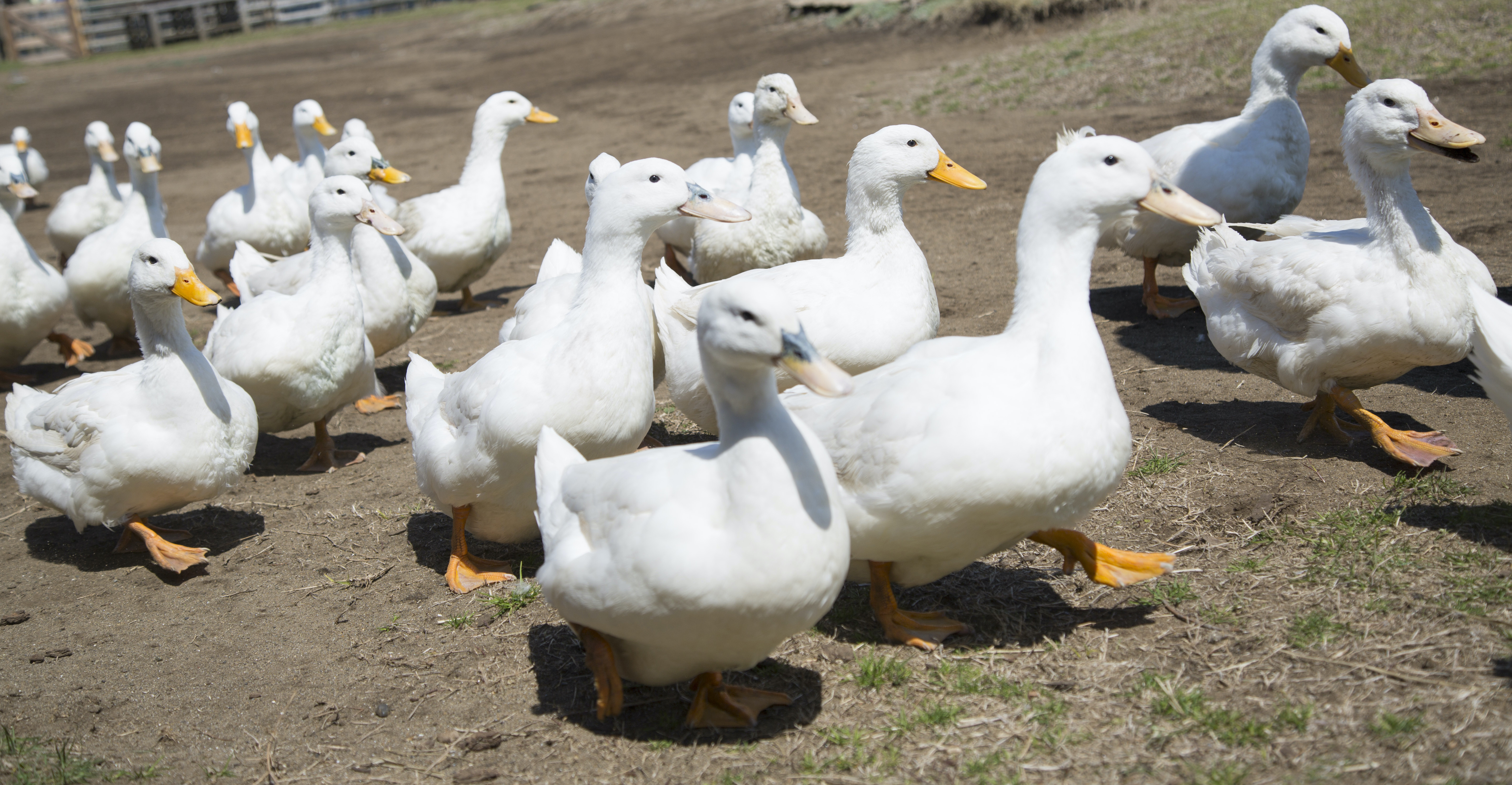
Our supplier's requirements are species-appropriate animal husbandry and slaughter. They categorically reject down from live-plucked and force-fed animals and only use class I down according to DIN 12934. We work only with suppliers who share our views and can provide us with complete and transparent documentation of the origin of the down/feathers, without exception.
OBB processes the raw materials – down and feathers – themselves at their production site in Lörrach, Germany. They are only able to guarantee perfect quality assurance by monitoring their closed production chain on site. OBB's in-house laboratory, certified by the European Down & Feather Association (EDFA), plays a key role in continuous quality inspection. The lab features state-of-the-art technology and participates in collaborative testing every year.
The down/feathers are inspected in the lab for their composition, filling volume, hygiene and cleanliness, oil content, and many other variables. The analysis of representative samples allows for precise results and an optimal assessment of the usability of the raw materials.
In the first processing step, the down and feathers is washed in special washing machines with water from OBB's own deep well, without using any chemical additives or bleach. At this point they can also use a NOCAR® treatment to make the feathers and down washable at high temperatures.
The down/feathers are then put in a device called an absorber and dried at approximately 266°F / 130°C, which also sterilises them. After the down/feathers cool down, they are sorted. The sorting is achieved using a simple yet sophisticated method: the materials are loosened up by an agitator in the sorting machine, which consists of several chambers, and moved along by a stream of air. Depending on their weight, the heavier feathers end up in the first chamber. The small feathers fly over to the next station. Even smaller feathers find their way to the third chamber, while the down floats into the fourth, last chamber. Finally, the materials are mixed according to the customer’s request. The different material types that were sorted out are mixed together in large mixing machines.
Another quality inspection is conducted at the end of this process.
DOWNPASS 2017 is the zero-tolerance standard for the monitoring of breeding conditions and the exclusion of live plucking and force-feeding. Its aim is to globally promote the proper raising of geese and ducks kept for farming purposes. This includes the responsible sourcing of feathers and down harvested as a by-product of meat production. Traceability must be comprehensively documented in order to ensure a transparent supply chain. In addition, the composition of the filling material is inspected. The standard tools are on-site inspections throughout the supply chain, documentation reviews, plausibility checks and laboratory analyses. We are also audited.
Traumpass is a quality seal for down and feather-filled bedding. Products marked with this seal must be filled with feathers and down from the two highest classes l and ll in accordance with EN 12934. In addition, all raw materials used in Traumpass products are by-products from poultry production, sourced exclusively from slaughtered animals.
The label ‘Traumpass DIN tested’, which is sewn into every product, contains an individual lot-specific testing number that allows the manufacturing company to be identified. The origin of the down and feathers used for filling can be traced back via documents such as delivery notes, invoices, and tax and import certificates, ending at the slaughterhouse from which the raw materials were sourced. This guarantees that products bearing the Traumpass seal do not contain materials from live animals. Checks to ensure that the holder of the seal follows these guidelines are carried out via regular audits of the companies by the certification organisation DINCERTCO, Berlin, Germany.
The certificate ‘Traumpass DIN tested’ is only awarded by DINCERTCO, Berlin if there is proof that the product quality and traceability conditions have been met. Only then may the label ‘Traumpass DIN tested’ be used.